

Off Notes
While I was working in the olive oil industry, I went through a week-long course on tasting and identifying defects, and we spent days learning everything that can go wrong in production, storage, and use to make an oil taste off. I didn't enjoy tasting the fusty, musty, rancid, and grubby oils. But by the end of the week I could actually name them, and I was horrified to find out that most of the oil in my own pantry (not the olive oil) was rancid. From then on, rancid oil at restaurants and at home stood out like a neon sign yelling yuck!
Every defect has a cause, and most of them trace back to something that happened between the tree and the bottle. Here's what each one smells and tastes like, where it comes from, and how you can start tasting for them at home.
How official tasting panels work
The International Olive Council (IOC) sets the rules for how official tasting panels judge olive oil. A panel is made up of 8 to 12 trained tasters, and each one gets a small glass of oil warmed to 28°C (about 82°F) to smell, taste, and score for how strong any defects are and how fruity the oil is. The glasses are dark-colored on purpose. If you can't see the oil, its color can't bias what you think you're tasting.
For an oil to be graded extra virgin, the panel's median defect score has to be zero and the oil has to have some fruitiness, and it also has to pass a set of lab tests. If the defect score lands above zero but no higher than 3.5, the oil is "virgin." From 3.5 to 6 it's "ordinary virgin," and anything above 6 is "lampante," which has to be refined before it can be sold as food.
Bitter and pungent are good
The first time I tasted a medium robust oil, the swallow made me choke and I almost spit out the rest. How could oil be spicy!? That peppery burn in the back of your throat is called pungency, and it's a good thing, and so is bitterness. Along with fruitiness, they're the three positive qualities panels look for. Bitterness comes from olives picked green or just as they're turning color, and pungency is common in oil made early in the harvest, so an oil can make you cough and still be completely clean.
How to taste at home
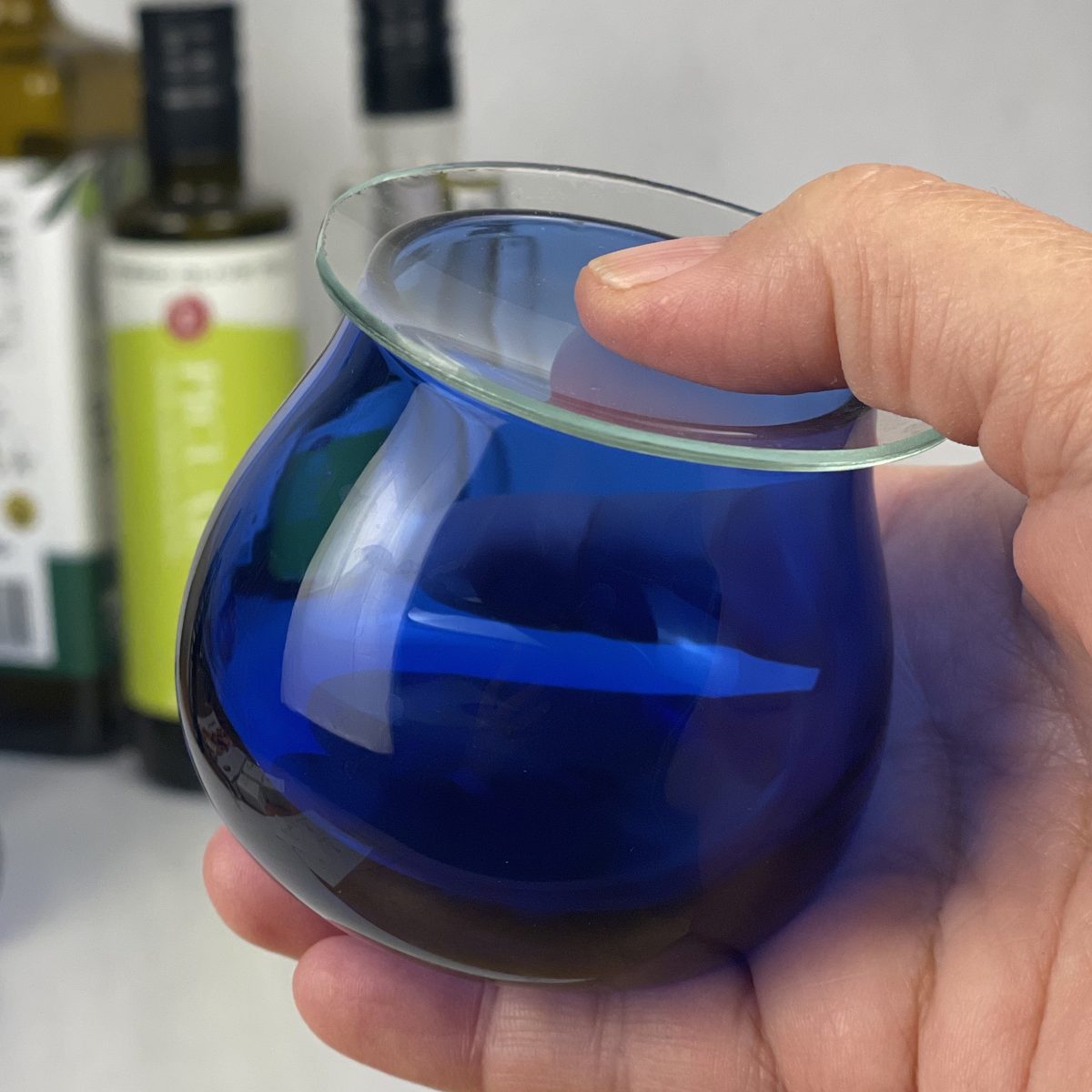
Pour about a tablespoon of oil into a small glass, hold it in your palm to warm it up, and cover the top with your other hand. Give it a swirl, uncover it, and smell. You'll catch most defects by smell before you ever taste them. Then take a sip, and before you swallow, make a sucking motion to pull some air in through your teeth and aerate the oil (yes, it's noisy). Swallow slowly. Green apple slices between oils will clear your palate.
If you think an oil might be off, taste it next to a fresh one, ideally from the most recent harvest. Defects are a lot easier to pick out when you have something clean to compare against. Most defects start before the olives ever get to the mill...
All 15 defects, and where each one starts
- What fusty, musty, winey, rancid and the rest actually smell like, in plain words
- Where each one begins: in the olives, at the mill, or after the bottle is sealed
- The one defect you control at home, and how to keep it out of your kitchen
- A side-by-side tasting you can do this week with the oldest bottle in your pantry
Open the Library tab and look for "Off Notes."
Sources: International Olive Council, COI/T.20/Doc. No 15/Rev. 11 (2024), "Sensory analysis of olive oil: Method for the organoleptic assessment of virgin olive oil"; International Olive Council, COI/T.20/Doc. No 5/Rev. 2 (2020), "Glass for oil tasting"; Olive Oil Times Lab, "Common Olive Oil Defects".