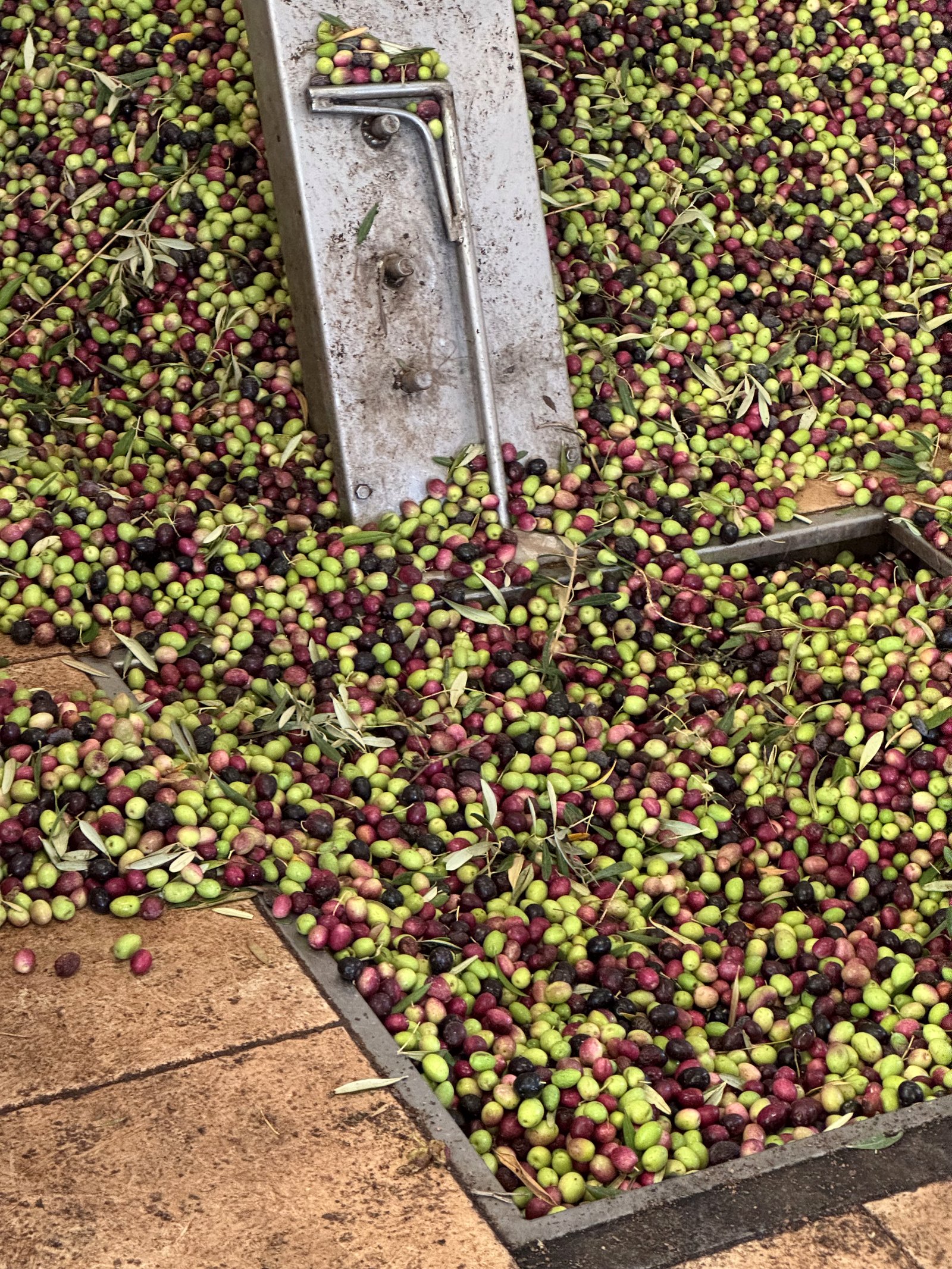
The Press Without a Sign
There's a kind of olive oil in Morocco that you can't buy anywhere. Not because it's rare or precious — because it's not for sale. It's the oil that comes out of a community press that families bring their own olives to and walk home with for the year.
We went looking for one. It was hard to find.
The press doesn't have a sign on the road. There's no exterior that announces what's inside. These places aren't for tourists; they're for the community. They don't market themselves to outsiders. We asked local guides for help. We used Google Translate to explain what we wanted — because the idea of visiting the plant without bringing olives didn't compute. The press is for processing your harvest, not for being toured. People kept asking, kindly, why would you want to see this?
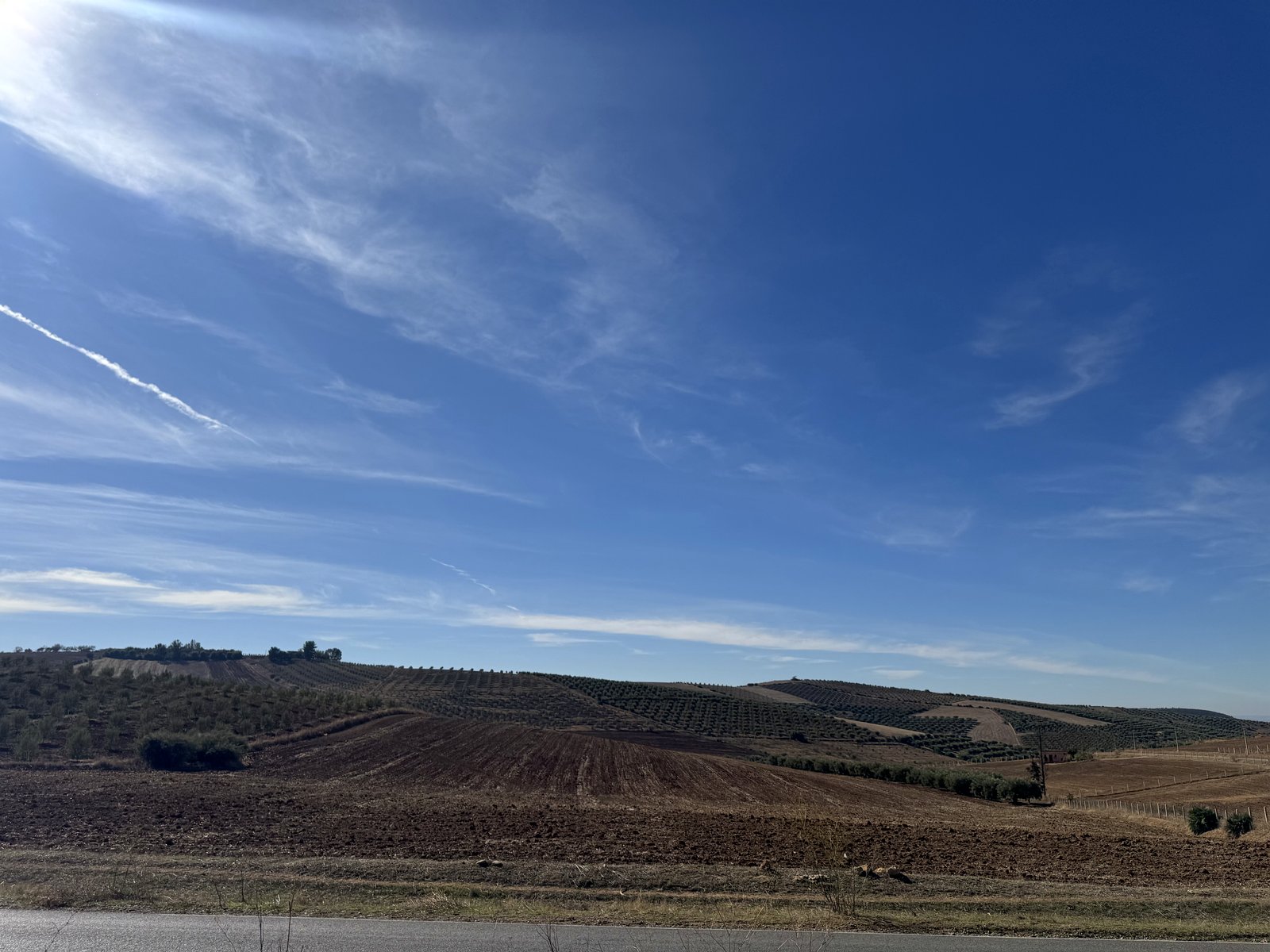
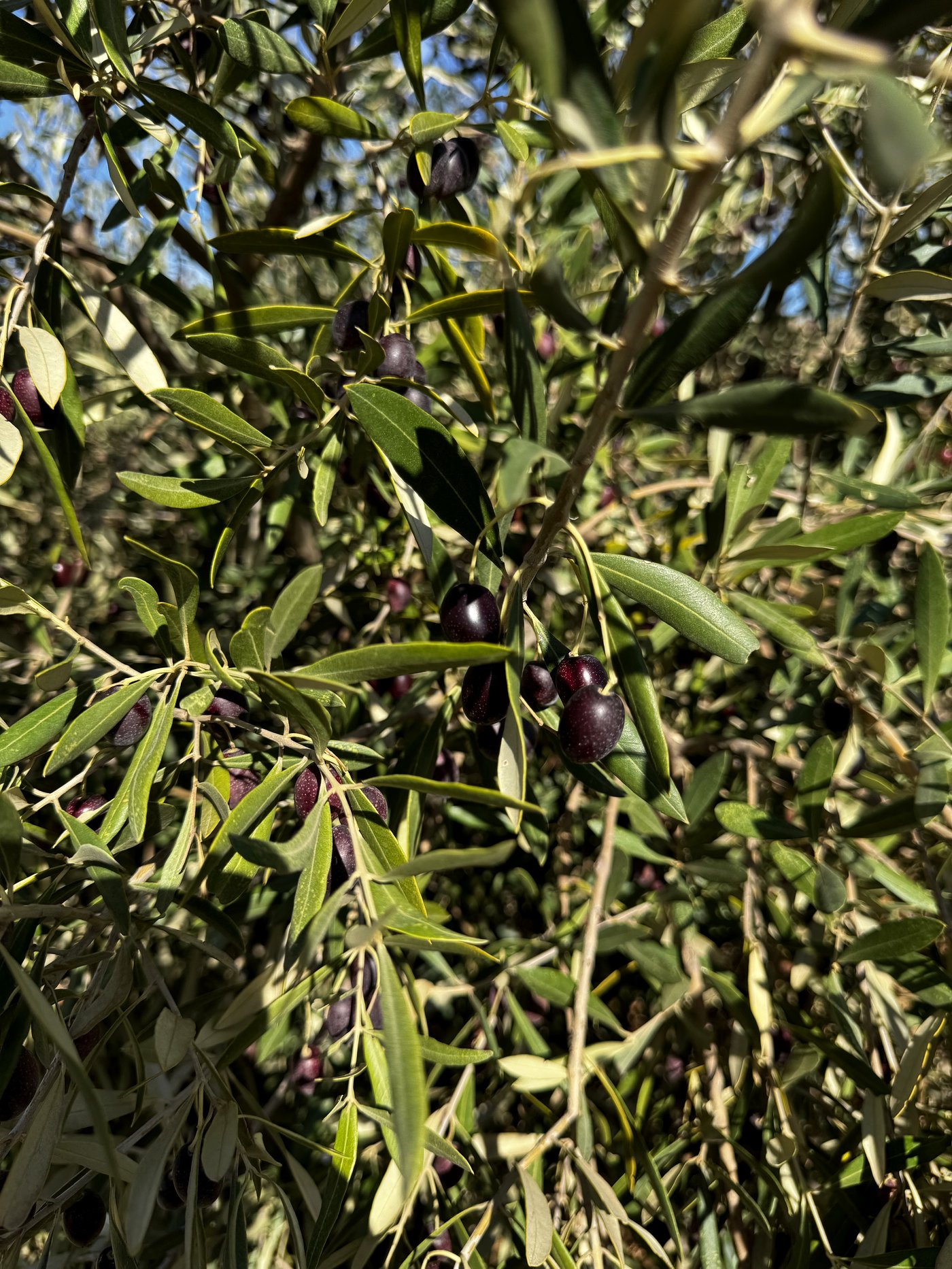
What we'd been noticing on the way was that olive trees in Morocco are not a regional crop. The big commercial groves are up near Fez and the Atlas mountains. But the smaller personal ones — handfuls of trees a family had planted next to their own front door — are everywhere. House courtyards across the country. Trees you walk past on your way home. That's the part that wouldn't leave my head: olive trees as something woven into the daily fabric of where people live.
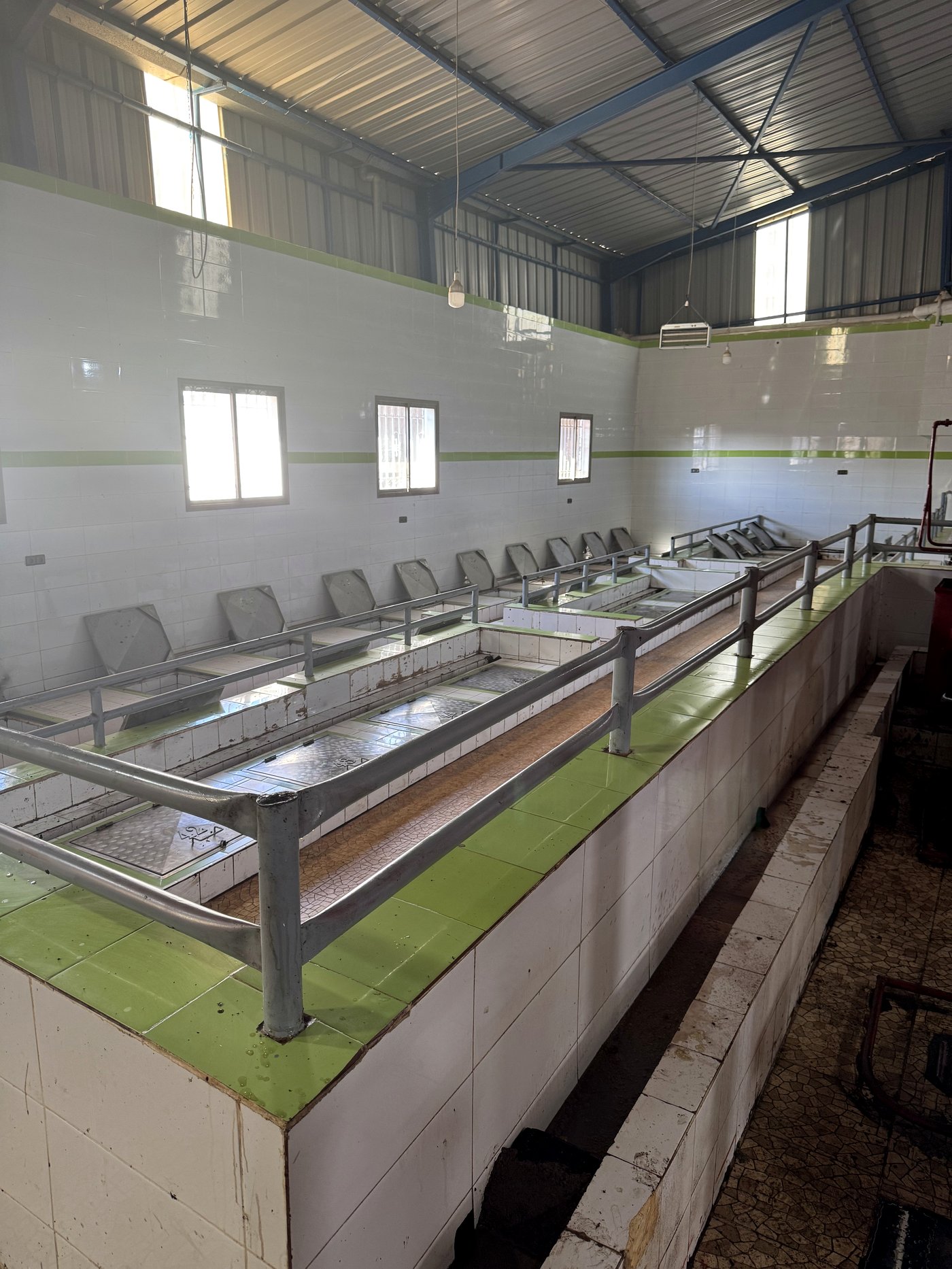
When we finally got into a press, it was bigger and more substantial than I'd expected. A high-ceilinged room. Tile floor with a bright green stripe at the base of every wall. A long row of metal collection stations, each one a stop for a different family's olives moving through the press. Light came in from windows up high. It wasn't a mom-and-pop one-press shed. It was a real shared facility, built specifically so the families of an area could process their own harvest themselves, side by side.
People were coming in with bags. With buckets. With pickup truckloads. Of all ages — kids, parents, grandparents — many also carrying olives. Someone was always pouring tea. Someone was always inspecting their own olives. There was a whole social temperature to the place that I didn't fully capture in photos and I'll do better next time.
The pressing was rudimentary — stone, metal, gravity. The oil that came out of it wasn't EVOO and would never compete in a competition. The press wasn't temperature-controlled. The olives weren't sorted to the standard a high-craft producer would insist on. There was air, there was light, there was time before the oil reached a sealed container. Defects would be in there.
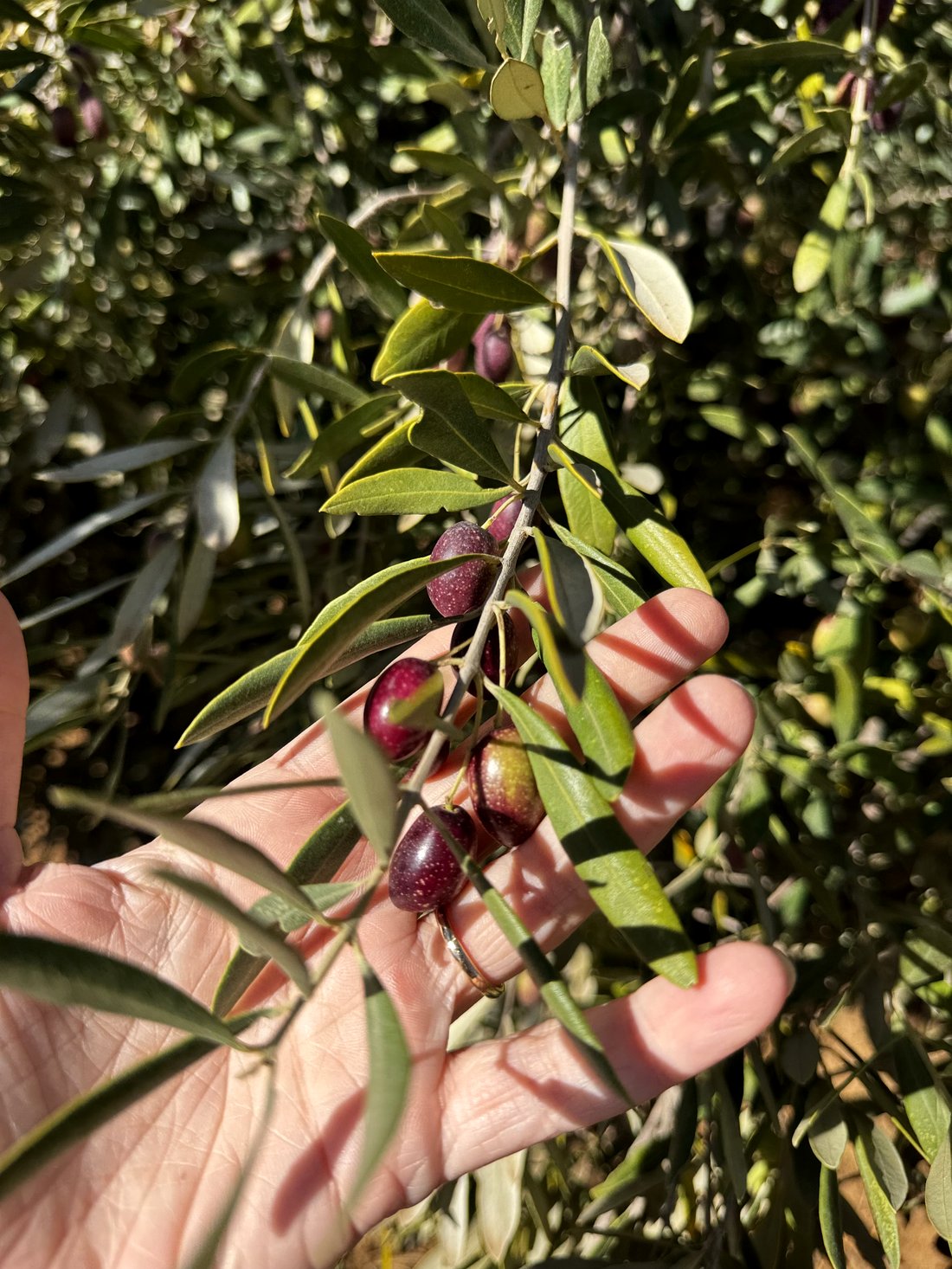
But that wasn't what the place was for. This was the oil this family would cook with for the next year. Daily. As a staple. Drizzled into pots, fried with eggs, poured over bread. Not a finishing oil. Not a tasting oil. The thing that goes in everything, the way butter or salt does in most American kitchens. They'd brought their own olives from their own trees. They watched the press run. They took home what came out of it.
I worked at the world's largest olive oil producer for two years and I learned that there's a whole different kind of artistry that happens at the high-craft end of the spectrum — the closed-system presses, the temperature controls, the harvest-timing science, the lab tests, the certifications, the producers who chase NYIOOC medals because they actually care about defending what EVOO means. That work is real. The bottles those producers send out into the world cost what they cost because the craft inside them is genuine.
What the Moroccan press gave me wasn't a quality lesson. It was an integration lesson. Olive oil there isn't a topping. It isn't a special-occasion drizzle. It isn't a $30 bottle on a shelf you're saving for guests. It's the thing that's in everything, every day. And you can't really see what that does to a culture's relationship with food until you're standing in a room watching a kid hand his grandmother a bucket from her own tree.
The locals who asked us, kindly, why would you want to see this? — they weren't wrong to ask. The press is a utility. It's a place where you go to do a thing. It isn't a destination. That a couple of Americans drove across the country and used a translation app to explain why we wanted to watch a press run is, when you think about it, a pretty fair picture of the difference. They don't have to learn olive oil. We get to.
There's a spectrum, and it's wide.
There's the daily cooking oil — a good EVOO at $10–15 a bottle, the kind that goes in the pasta water, gets drizzled over the eggs, cooks the onions. Plenty of mass-market and small US producers do this well. Buy the big bottle. Use it like you'd use butter.
There's the mid-shelf single-estate, $20–30 a bottle, where you start to taste the producer's hand — a specific cultivar, a specific harvest, a specific story you can find on the back label. This is the bottle you reach for when you're cooking something you actually want to taste. Beans with salt. Ricotta on toast. A simple bowl of soup that doesn't need anything else.
And then there are the finishing oils. The NYIOOC-decorated, single-estate, single-cultivar, $35-and-up bottles where the producer has put years into honing what comes out of their press. These aren't extravagance — they're craft, and the craft costs what it costs. They're the bottles you finish a piece of fish with. Drizzle on the cheese course. Pour over a salad you're proud of.
If I could prescribe one thing for anyone who wants to fall for olive oil the way I did, I'd say live in the spectrum. Cook your weekly pasta with the everyday EVOO. Pour the mid-shelf over the simple bean dish. Save the high-craft for a dinner you're cooking for someone you love. Take a tasting class if you can find one — they train your palate faster than years of casual sipping. And — this is the part I really want for you — go visit a press. Anywhere. A community press abroad if you're traveling. A single-estate frantoio in Tuscany. A small California producer at a farmers market in season. Bring olives if you can. Bring your curiosity if you can't. Just go. And then come home and taste your olive oils with a new depth of perspective, feeling connected and nourished.