
The New Harvest
Right now, all across the Mediterranean, nets are going down under the olive trees. Spain's new olive oil season officially opened on October 1, brokers in Greece expected the first new oil out of the Peloponnese and the north by the second half of the month, and mills in California are getting ready for their own run. Nearly every bottle we'll open over the next year or so is being picked, milled, and tasted in the next few months.
Here's how the season usually moves, from the first green olives to the bottles that reach our shelves in the spring, along with what the early numbers say about this year and a few ways to follow along from your own kitchen.
Green, purple, black
The flavor of a year's oil starts with when the olives come off the tree. Olives ripen from green through purple to nearly black, and the earlier a grove is picked, the greener and more intense the oil tends to be, with more bitterness, more of that peppery catch in the back of your throat, and aromas closer to cut grass, green tomato leaf, and herbs. Green olives also give up a lot less oil, so it takes many more of them to fill the same bottle, which is a big part of why early-harvest oils cost what they do.
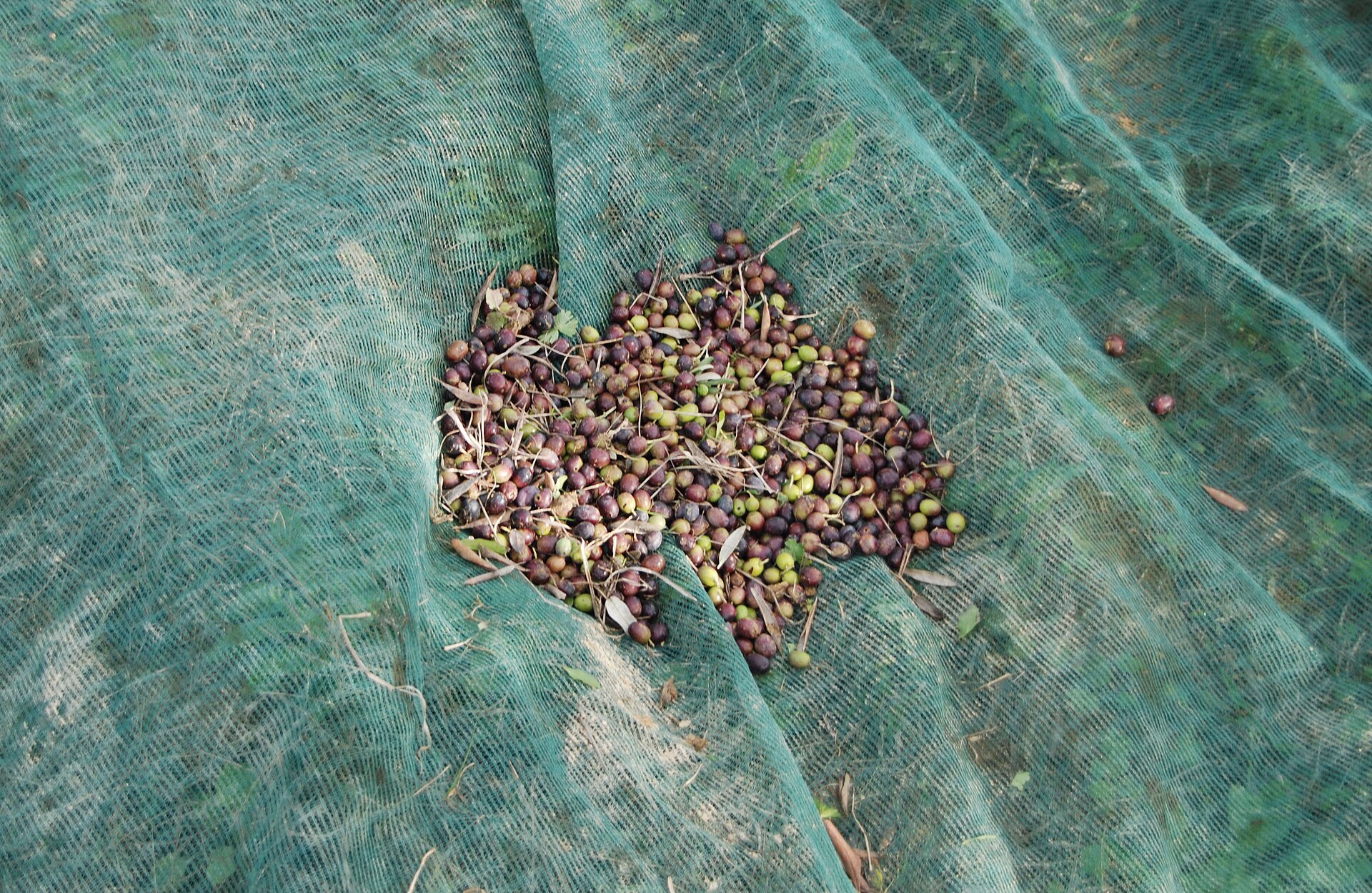
Let the fruit hang longer and the oil comes out softer and rounder, more ripe fruit than fresh grass, and the mill gets more of it. Neither one is more correct than the other, since a bold early-harvest oil is wonderful over a bowl of white beans with a pinch of salt, and a mellow, riper oil is lovely on fish or in a cake, and a lot of producers pick somewhere in the middle or blend lots together to get a bit of both. The photo at the top of this page shows that range on a single net, with green, purple, and almost-black olives all picked together.
Once the olives are off the tree the clock starts, because the fruit begins to break down as soon as it's picked and bruised. Careful producers try to get their olives milled the same day, and from there the work is crushing, slow kneading, and a spin through the decanter (I wrote more about that part in From Stone to Spin).
Olio nuovo, the first pour
In November and December you might come across bottles labeled olio nuovo ("new oil" in Italian) or novello. This is oil that goes almost straight from the mill into the bottle. Most extra virgin olive oil is left to rest for a while so the tiny bits of olive floating in it can settle out, but olio nuovo skips that step, so it's often cloudy, a vivid green-gold, and about as fresh and intense as olive oil gets.
The trade-off is that it doesn't keep. Those little bits of fruit start to ferment within a few weeks and bring off flavors with them, which is why producers sell it as a seasonal release (UC Davis, when it bottled one from its campus trees, suggested finishing it by the end of January). If you find a bottle, the best thing to do is open it right away and pour it generously over something simple, like toast, soup, or those beans, rather than saving it for an occasion.
Resting, bottling, and competition season
The rest of the harvest takes the slower route. After milling, oil is usually left to settle for a couple of months, then filtered or drawn off its sediment and stored in stainless steel tanks, often under nitrogen and kept cool, so it can be bottled as orders come in throughout the year. That's why most new-harvest bottles from Europe tend to land on American shelves in late winter and spring rather than at Christmas.
It's also competition season. Producers send samples of the new oil off to be judged, and at the New York International Olive Oil Competition, registration runs through February and March with results rolling out over the following weeks (this year the first awards were announced in early February). So when you see a fresh medal on a bottle next spring, it's for oil from the harvest happening right now.
And just as the northern oils settle in, the Southern Hemisphere picks up, with harvest in Chile, Argentina, South Africa, and Australia running roughly April through June. Between the two hemispheres there's fresh oil coming off a mill somewhere for a good part of the year.
What this year looks like so far
These are first estimates, made while olives are still on the trees, and they always get revised. The International Olive Council and the European Commission usually publish firmer numbers in November and December, and the weather between now and picking can still change things. With that said, here's the early picture.
Spain is expecting a bigger crop. The agriculture ministry's first estimate, released October 1, is about 1.6 million tonnes, roughly 23% more than last season, with Andalusia accounting for about 1.26 million tonnes of that and Jaén alone up to 575,000. Spring weather helped, though summer heat is still a question mark for groves that aren't irrigated.
Greece is also looking up. Industry and broker estimates gathered in early October put the crop somewhere around 280,000 to 300,000 tonnes, up from about 232,000 last season, with Crete and the Peloponnese leading the way.
Tunisia is going the other direction after a record year. Estimates from producer groups and analysts range from about 200,000 to 300,000 tonnes, down from roughly 500,000. Olive trees often alternate between heavy and light years, and after a crop that big, a lighter one was expected.
Italy doesn't have a solid number yet. Much of the north and center had an intensely hot, dry summer with almost no rain from mid-June to early August, plus some damaging hailstorms, and olives in groves without irrigation were running small. On the brighter side, olive fruit fly damage has been much lighter than last year, and growers there are hopeful.
Every harvest tastes a little different, the same way wine does from one vintage to the next, so even the same producer's oil can change from year to year depending on the heat, the rain, and when they decided to pick.
Following along from home
The easiest thing to do is start reading the harvest date. Not every bottle has one, but many do, and for this season it might read "Harvest 2026," "2026/27," or a month like November 2026. It tells you a lot more about what's in the bottle than a best-by date, which is usually counted from when the oil was bottled rather than when the olives were picked.
If you see an olio nuovo this winter, try it. And when the new-harvest bottles start showing up, buy one and taste it next to the bottle you're finishing from last year. Pour a little of each, take a slice of green apple in between, and you'll notice how much the bitterness and pepper of a new oil soften over the months after it's made. It makes a great small tasting to do with friends, too (there's a guide for that here).
Last year's bottle doesn't need to go anywhere, either. As long as it still smells fresh and has been kept somewhere cool and dark, it's a perfectly good oil to cook with while the new one gets the raw, drizzle-over-everything treatment. Harvest only comes around once a year, and these first few months are when the oil is at its liveliest, so it's a good season to pour a little more generously than usual.
Sources: Spain's Ministry of Agriculture (MAPA) 2026/27 estimate, as reported by RUSSPAIN and Wikifarmer (October 2026); Greek estimates from Mercacei, via Wikifarmer (October 2026); Tunisian estimates via Wikifarmer (October 2026); Italian growing conditions from Olio2go (August 2026); estimate timeline from Virginia France; olio nuovo from America's Test Kitchen and UC Davis; early harvest characteristics from Aceite de las Valdesas; NYIOOC timing from Olive Oil Times.